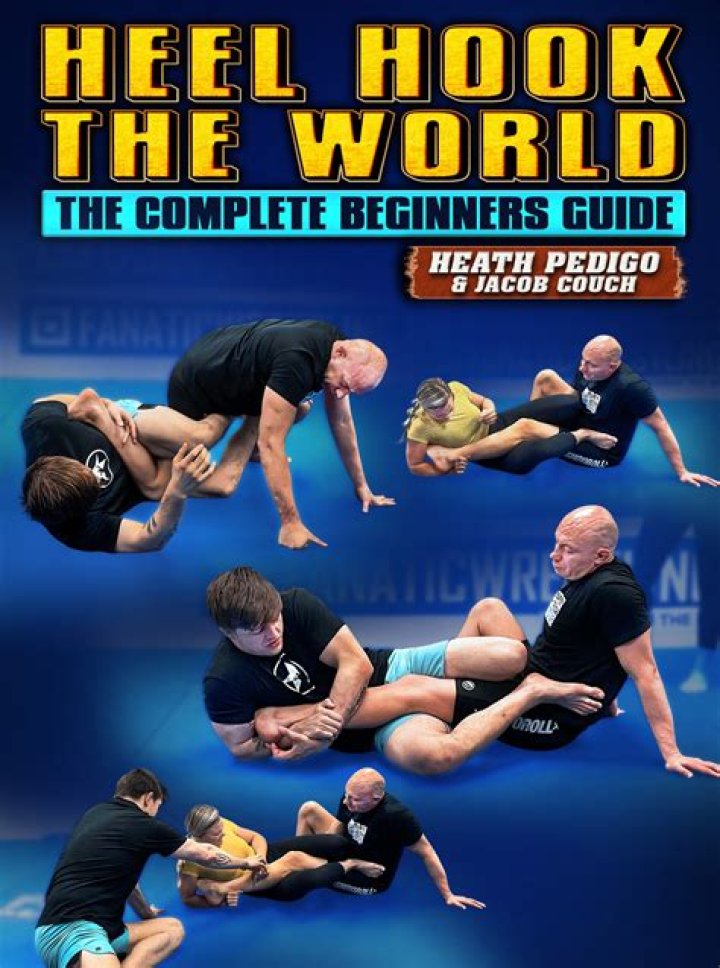
Heel hooks and reaps will remain illegal for masters competitors and for purple, blue and white belts.
Can white belts do leg locks?
If You're A White Belt and You Want to Train Leg Locks with a Colored Belt, Say Something Ahead of Time and Get Their Agreement – most colored belts are happy to safely train leg locks with White Belts.
Why are there no heel hooks in gi?
So I've asked a couple people this question and have gotten two answers. One was that because of the friction it is too easy to control the leg and too hard to pull out of. And the other was that the ref can't see the knee to step in if the competitor isn't tapping in time.
What damage does a heel hook do?
Arguably the most damaging submission hold across all grappling styles, the heel hook works by isolating your opponent's femur and rotating the tibia beyond its normal range of motion. In addition to attacking the ligaments in the knee, certain variations of the heel hook also attack the ligaments in the ankle.
How do you force a heel hook?
Control your opponent's leg above their knee. You have to do this along with keeping your hips aligned with your opponent. The other thing is get their leg to bend at an angle to be able to get the heel hook. So after getting control of the opponent's leg, you can now go for their heel.
32 related questions foundWhy are heel hooks illegal in BJJ?
Heel hooks do impose a danger. And this is one reason IBJJF has not allowed them. When a grappler doesn't respond properly when trying to escape, they can cause damage to the knee.
Are heel hooks painful?
A small percentage of climbers will start to experience pain or discomfort when they start heel hooking intensively again.
How long does it take to recover from heel hook?
While most patients should expect a heel spur surgery recovery time of a few weeks, it may take up to three months for some patients to make a full recovery following heel bone spur surgery.
Where does a MCL tear hurt?
Most people who tear their MCL feel pain and a "pop" in their knee when the injury happens. Their knee usually swells soon after the injury, most of the time around the inside part of the knee.
Can you reap the knee in IBJJF?
Knee reaping is illegal in the IBJJF and the UAEJJF.
It is not allowed due to the perceived level of harm and injury that can (and does) occur to the knees when it is performed. However, there are some competitions like ADCC and other such no-gi grappling tournaments that do allow knee reaping.
Which is harder GI or NoGi?
Where traditional gi BJJ can be slow and methodical, no-gi tends to be faster and more explosive. It's extremely difficult to hold someone down without all that extra gi material. Things are slippery, you don't have gi grips, there are a ton more scrambles, and it's harder to get submissions.
Are leg locks legal in IBJJF?
In addition to twisting leg locks and leg reaping, the new rules also allow competitors to apply outside pressure on toeholds and turn toward the non-attacked leg when applying a straight footlock. The new leg entanglement and submission rules apply only to the adult brown and black belt divisions.
Are ankle locks allowed at white belt?
IBJJF Adult White Belt Leg Lock Rules
Thus, the IBJJF only allows white belts to perform straight ankle locks. This applies in both gi and no-gi competition. When performing a straight ankle lock, the white belt competitor must turn away from the knee of the ankle he or she is attacking.
Are ankle locks allowed in UFC?
Bear in mind that wrist-locks and ankle-locks are allowed in MMA, but they're often mistakenly categorised as illegal.
What is leg locking?
Wraps one's legs around another, locking them between one's legs and body. This term is mainly used in a sexual sense.
What does a heel hook do to your knee?
The muscle is also involved with stabilization of the retraction of the backside of the knee joint and the lateral meniscus during the flexion of the knee. This function is likely why athletes have pain with heel hooking withthe knee in an externally rotated, flexed and abducted position.
How do you injure LCL?
The causes of an LCL injury include:
- A direct blow to the inside of the knee. The force of the blow can impact the ligament along the outside edge of the knee enough to stretch it or make it tear. ...
- Changing directions quickly or pivoting on one foot. ...
- Landing badly or awkwardly from a jump.
Who invented the heel hook?
Ivan Gomes and Brazilian Catch Wrestling
It is a popular theory (albeit one nearly impossible to verify) that heel hooks originated in catch wrestling. This may be the case, but we do know and can confirm that they were utilized by Brazilian grapplers prior to jiu-jitsu becoming known overseas thanks to Ivan Gomes.
What is an LCL sprain?
An LCL sprain usually occurs when the knee pushes out beyond the usual range of motion. This overstretches and tears the ligament. An LCL sprain may have causes including: direct contact to the inside of the knee, such as in a collision or a tackle. poor landing technique.
Are knee bars illegal?
At the time of this writing, knee bars are legal at brown belt in IBJJF tournaments. I had a few points in my answer. Rules change and are different for various competitions. The IBJJF is not very leg lock friendly, but submission-only formats (like the EBI) allow a much greater number of leg attacks.
What moves are illegal in BJJ?
Illegal Techniques In All Divisions
- NO heel hooks or twisting knee locks of any kind.
- NO striking of any kind.
- NO biting, hair pulling or eye-gauging.
- NO slamming of any kind.
- NO cervical neck cranks of any kind.
Are wrist locks legal in BJJ?
Are wristlocks legal in BJJ? The answer is, 'Mostly yes. ' The table on page 24 of the IBJJF rulebook clearly shows that wristlocks are illegal for kids, adolescents, and white belt adults.