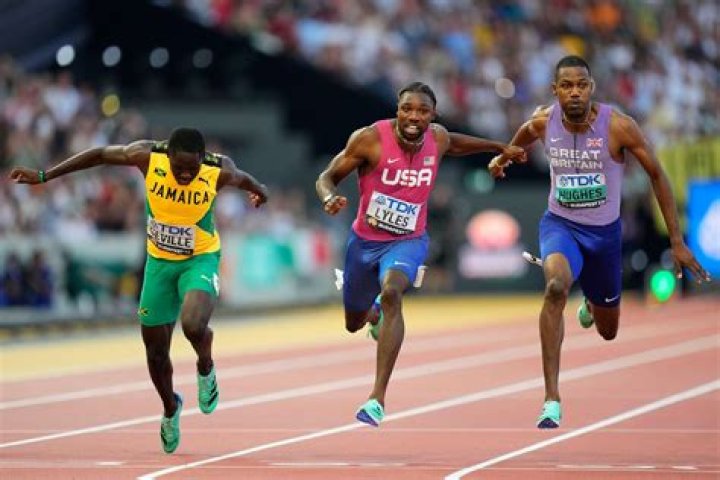
Movement strategies refer to a variety of approaches that will help a player or team to successfully achieve a movement outcome or goal. Movement strategies include moving into space to receive a pass from a teammate or hitting a ball away from opponents to make it difficult to retrieve or return the ball.
Why are movement strategies important?
By encouraging children & youth to think strategically, analyze game and activity structures, and make connections between different games and game components, the movement strategy expectations give them an opportunity to exercise their critical and creative thinking skills, build confidence, and increase their ...
What is an example of a movement concept?
Movement concepts are the ideas used to modify or enrich the range and effectiveness of skill employment. Movement concepts include space awareness, effort, and relationships.
What is the concept of movement?
1 : the act or process of moving and especially changing place or position : an instance of moving the movement of the planets. 2 : a program or series of acts working toward a desired end a reform movement.
What is a movement sequence in sport?
The combination of fundamental movement skills and movement elements to enable the body and/or objects to move in response to a stimulus.
23 related questions foundWhat is sequence movement?
The term sequential movement describes a figure or body section going through a series of changing positions. The mechanics of movement depend on many factors, including muscle dynamics, joint action, shifting of weight, changes in a figure's center of gravity, and the influence of gravity on the moving figure.
What is a movement sequence example?
Examples: sharp: bounce, burst, dab, dart, explode, fling, flick, jab, jerk, jitter, march, poke.
What are the 3 basic movements?
There are three main categories of fundamental body movements:
- Locomotor.
- Nonlocomotor.
- Manipulative.
What are the four categories of movement?
There are 4 types of movements: reflex, postural, rhythmic and voluntary.
What are 4 basic movement concepts?
Movement concepts (or elements of movement) explored in the curriculum include body awareness, spatial awareness, effort awareness, and relationship to/with objects, people and space.
What are the qualities of movement?
qualities of movement: The most recognized qualities of movement are sustained, percussive, suspended, swinging, and collapsing. Movement qualities are considered a part of the element of force/energy.
What are the important concepts in learning movement skills?
Fundamental movement skills are important to the motor development of children's physical, cognitive, and social growth. There are four categories in which the fundamental skills fit for under-fives: Stability and Balance, Manipulative, Locomotor, and Movement and Body Awareness.
What is the importance of movement in teaching physical education?
Acquisition of movement skills is a key factor for students choosing to lead physically active and healthy lifestyles. Students are less likely to participate in physical activity if they have not learned the skills or experienced success in applying them.
Why is movement in school important?
Incorporating exercise and movement throughout the school day makes students less fidgety and more focused on learning. Incorporating exercise and movement throughout the school day makes students less fidgety and more focused on learning.
What is effort movement education?
Effort combines quality, shade, passions, and inner attitudes that are communicated through movement. Effort can be described as both practical and sensitive. The practicality and sensitivity come through movements in the use of flow and time. Effort is used to understand movements on a deeper level.
What is flexion movement?
Flexion – bending a joint. This occurs when the angle of a joint decreases. For example, the elbow flexes when performing a biceps curl. The knee flexes in preparation for kicking a ball. Extension – straightening a joint.
What are the 6 types of movement?
The 6 Types of Movement
- Flexibility. Flexibility is extending and contracting the muscle tissues, joints, and ligaments into a greater range of motion accepted by the nervous system. ...
- Mobility. ...
- Strength. ...
- Power. ...
- Endurance. ...
- Stability.
What are the 5 types of motion?
Rotatory motion, rotatory motion, oscillatory motion, uniform circular and periodic motion, rectilinear motion, oscillatory motion and periodic motion.
What are the 7 functional movements?
There are seven basic movements the human body can perform and all other exercises are merely variations of these seven: Pull, Push, Squat, Lunge, Hinge, Rotation and Gait. When performing all of these movements, you will be able to stimulate all of the major muscle groups in your body.
What are the components of movement?
4 components of movement (anatomy)
- Components of movement 1.Skeleton 2.Connective Tissue 3.Muscles 4.Nerves.
- Muscle Tissues • Skeletal muscle tissue • Cardiac muscles tissue • Smooth muscle tissue.
- Structure - skeletal muscles.
- Muscle contraction ! • Creates movement at a joint ! • Stabilise a joint.
What are the 2 kinds of fundamental movements?
Fundamental movement skills categories include:
- Balance skills - Movements where the body remains in place, but moves around its horizontal and vertical axes.
- Locomotor skills - such as running, jumping, hopping, and galloping.
- Ball skills - such as catching, throwing, kicking, underarm roll and striking.
What is a specialized movement skill?
Movement skills that are required in more organised games and activities. Examples of specialised movement skills include fielding a ground ball in softball, climbing a rock wall and performing a grapevine step in dance.
What muscles are used for movement sequence?
Major muscles involved in movement
- Deltoids.
- Biceps brachii.
- Brachio-radialis.
- flexor-carpi-radialis.
- Palmaris longus.
What is dancing without choreography?
Freestyle. Improvisational dancing that allows the dancer to express their individual style (i.e. a dance that is not pre-planned) It's the process of spontaneously creating movement that was not choreographed ahead of time.